
Open LinkedIn on any given Tuesday and you’ll spot at least three new technology leadership titles you didn’t have last week. “Fractional CTO at three startups.” “Chief Architect, Office of the CTO.” “Non-Executive Director, Technology.” The British tech scene is busy unbundling what used to be a single role into a portfolio of part-time, advisory, governance and embedded variants. Some of that reflects how organisations actually run now. Some of it is title inflation hoping nobody asks too many questions.
This post is for two audiences at the same time. The first is anyone trying to work out which of these roles their organisation actually needs, or what to make of the candidate in front of them with “Fractional CTO” on their CV. The second is anyone in a senior engineering or architecture seat thinking about which of these paths to walk into next. Both groups are wrestling with the same underlying confusion, which is that the word “CTO” no longer points reliably at one job.
I want to take a position early so the rest of the post has somewhere to go. Most of these roles are legitimate responses to how digital organisations work in 2026, and the unbundling has been good for the market. The risk worth talking about is the word “CTO” coming loose from the accountability that used to anchor it.
Table of contents
Open Table of contents
The Substantive CTO Role
Before we look at the variants, it’s worth being precise about the original. A CTO in a serious UK organisation owns technology strategy and carries executive accountability for the engineering function. They sit at the executive table, typically reporting to the CEO or COO. They’re answerable for the cost curve of technology, for hiring leverage, for technical risk, and increasingly for regulatory exposure around AI, data and cyber.
That’s distinct from a few neighbouring roles people often confuse with it. A Head of Engineering owns delivery: throughput, quality, team health, the running of the engineering org day to day. A Chief Architect owns design coherence across systems and rarely carries P&L accountability. A CIO owns the estate, supplier relationships, identity, compliance and the IT operating model. There’s overlap at the edges, particularly in smaller companies, but the decision rights are different and so are the metrics each role gets measured on.
In smaller UK scale-ups those roles often collapse into a single person who calls themselves CTO because that’s the title the board recognises. That works for a while, as long as everyone is honest that the role is really CTO-plus-Head-of-Engineering-plus-half-a-CIO. Friction tends to start when the title travels with the person to a 5,000-employee organisation where it should mean something narrower and more strategic, and the person hasn’t worked out which parts of the old job they need to put down.
The Variants and Why Each One Exists
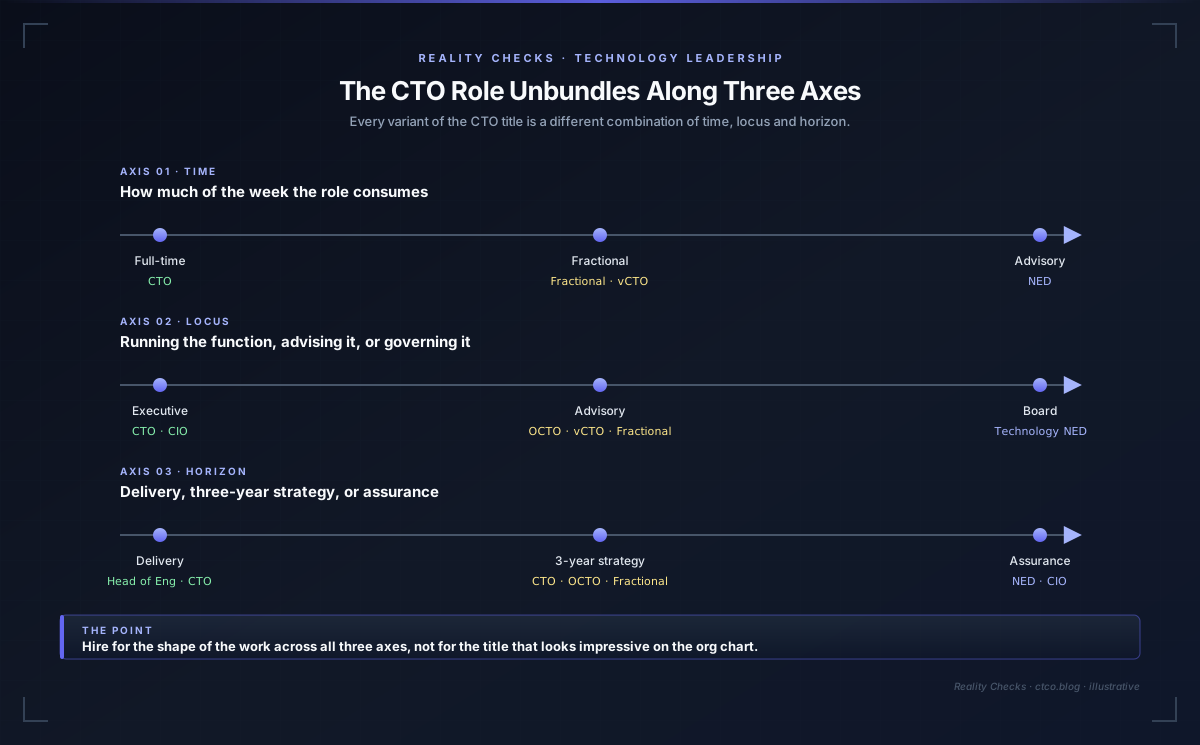
The shorthand for the rest of this section is that the CTO role has been split along three axes: time (how much of the week the role consumes), locus (whether you’re running the function, advising it, or governing it from a board), and horizon (delivery, three-year strategy, or assurance). Every variant below is a different combination of those three.
Office of the CTO (OCTO)
A staff function, almost always inside large enterprises, consultancies, or platform vendors. The OCTO does horizon scanning, internal advisory, R&D shaping, customer-facing thought leadership, and sometimes M&A technical due diligence. You’ll find them at Microsoft, AWS, the big systems integrators, and increasingly at UK enterprise IT services firms.
A single CTO can’t simultaneously run a 1,500-person engineering organisation and own the three-year strategic horizon, and the OCTO is the structural answer to that problem. It’s where the strategy work lives so the CTO can spend time on execution and the board.
The failure mode is the OCTO that becomes a parking lot for senior consultants with no real authority and no metrics. If the office can’t point at decisions it owned and outcomes it shipped, what you have is an internal think tank with a slightly grand name.
Virtual CTO (vCTO)
Usually consultancy-delivered, embedded into a client part-time, often through an MSP or digital agency. Common across the UK mid-market. The vCTO sets technology direction, picks platforms, and owns the technical relationship between supplier and client.
Most organisations need senior technical judgement long before they can justify a full-time CTO salary. A regional charity, a £20m manufacturer, a growing SaaS business at £3m ARR all benefit from someone who has done it twenty times before, and two days a month from an experienced vCTO is often a better investment than a full-time hire who hasn’t.
The pattern to be wary of is the vCTO who is really a sales-led account-management role wearing a strategic title. If every recommendation routes back to their own firm’s services, what you’ve actually bought is a senior pre-sales engineer with a different business card.
Fractional CTO
Same shape as a vCTO but typically independent and portfolio-based. One operator, two to four clients, one to three days a week each. The UK fractional market has grown sharply since 2022 as senior tech leaders have stepped off the permanent ladder and built their own books. Communities like CTO Craft in London have been quietly professionalising the practice for years.
Pre-Series-A startups, scale-ups between technical hires, and SMEs in transformation all need senior judgement at variable cost, and the fractional model fits that demand neatly. It also gives experienced operators a way to keep their hands on real problems without committing to one organisation full time.
The risk is portfolio dilution. A fractional engaged with eight clients is functionally a coach, which is a fine thing to be as long as everybody is clear that’s the contract.
Technology Non-Executive Director
Board-level, governance focused. Two to four meetings a year plus committee work. Technology NEDs have moved from rare to expected on UK boards over the last few years, particularly as the NCSC’s public guidance on AI assurance has sharpened and audit committees have grown a real appetite for cyber and AI literacy.
Boards need someone who can challenge executive technology claims with credibility. When the CIO presents the AI roadmap, somebody on the board has to be able to ask the right second and third questions, and for most mid-cap UK boards the Technology NED is how that capability gets onto the table.
The weakness is the optical appointment. A NED who attends meetings, nods, and adds a name to the annual report is a governance failure dressed up as a governance solution. The good ones read the architecture documents and ask uncomfortable questions about supplier concentration and model risk.
The CDO and CAIO Overlap
This is the muddier territory. Chief Digital Officers have existed in UK organisations for over a decade, usually as transformation-focused roles spanning product, data and technology. Chief AI Officers are more recent, often created because the board wanted to be able to say they had one.
Where the CDO or CAIO scope is clear and bounded, these roles work. Where they’re carved out of the CTO’s remit because somebody on the executive wanted a new title, the org chart starts working against itself. Two people owning AI strategy is one too many, and the friction usually shows up in the engineering org six months later.
Why the Proliferation Makes Sense
A 15-person scale-up gets a serious technical sounding board for a couple of grand a month. A FTSE 250 board gets an experienced challenger without committing to a permanent hire. A £200m mid-market business gets an OCTO function that lets its CTO spend less time in supplier meetings and more time on the actual roadmap. That’s the market doing useful work.
It also reflects how UK digital organisations have changed. Velocity expectations have gone up, costs are scrutinised harder, and assurance expectations have tightened. Rigid full-time-only leadership models don’t fit that shape, and variable-cost senior judgement does. There’s also a supply-side story. The post-2022 wave of redundancies across UK tech pushed a generation of experienced operators into independent practice, and many of them discovered they preferred it. The fractional market, in particular, exists partly because the people who can do the work decided they’d rather work that way.
Where the Title Loses Its Meaning
Most of the variants above are legitimate. A handful of patterns, though, are draining the word “CTO” of its weight, and they’re worth naming so that hiring managers and candidates can spot them.
The first is the LinkedIn-only fractional advising eight companies who couldn’t tell you, under questioning, what runtime any of them are on. There’s nothing wrong with being a coach or a strategy consultant, both are skilled trades, but the title on the profile should reflect what’s actually on offer.
The second is the four-person seed-stage company where the only engineer carries the title CTO. They’re a founding engineer doing a heroic job. Using “CTO” for that role is harmless as fundraising shorthand, but it makes life awkward for the actual CTO who needs to be hired after Series A and has to sort out the title geometry on their first week.
The third is the OCTO appointment with no authority and no measured outcomes. If the office exists to keep three senior people busy until somebody figures out what to do with them, what’s been created is a holding pattern with a brand.
The fourth is the optical NED hire. A name on the annual report and an honorarium, with no real challenge to executive thinking. That’s a governance gap with a paper plaster on it.
What ties these together is the absence of the accountability shape that should sit underneath the title. A real CTO can lose their job over a technology decision; a fractional or advisory CTO is paid to give advice that someone else then owns. Both are valuable, both deserve clear titles, and conflating them quietly devalues the senior version of the role for everybody.
If You’re Hiring One
The questions that separate substance from title are usually short and specific. Ask for the last technology decision they personally owned and what the measurable outcome was. Ask how many concurrent engagements they’re running and what the time split is. Ask where the boundary between advisory work and execution sits, and who owns the decision when those two disagree. For a Technology NED candidate, ask about the last executive position they pushed back on and what changed afterwards.
You don’t need a long interview process for those answers. You need to listen for specifics and notice when you get generalities instead. A CV that lists eight current advisory engagements is telling you something important about how much time the candidate will have for your problem.
A second, less obvious test is to look at what the role you’re hiring for actually needs across those three axes. If you need somebody three days a week to set platform direction for a year and then hand it over, that’s a fractional engagement, and writing the JD as a permanent CTO role will attract the wrong shortlist. If you need somebody at the executive table accountable for a £4m engineering budget and a 60-person org, that’s a permanent CTO, and a fractional with a busy portfolio is the wrong shape regardless of how good they are.
If You’re Aiming for One
The path is rarely linear, and the choice of variant matters as much as the seniority. Three of the more common UK pathways are worth describing properly.
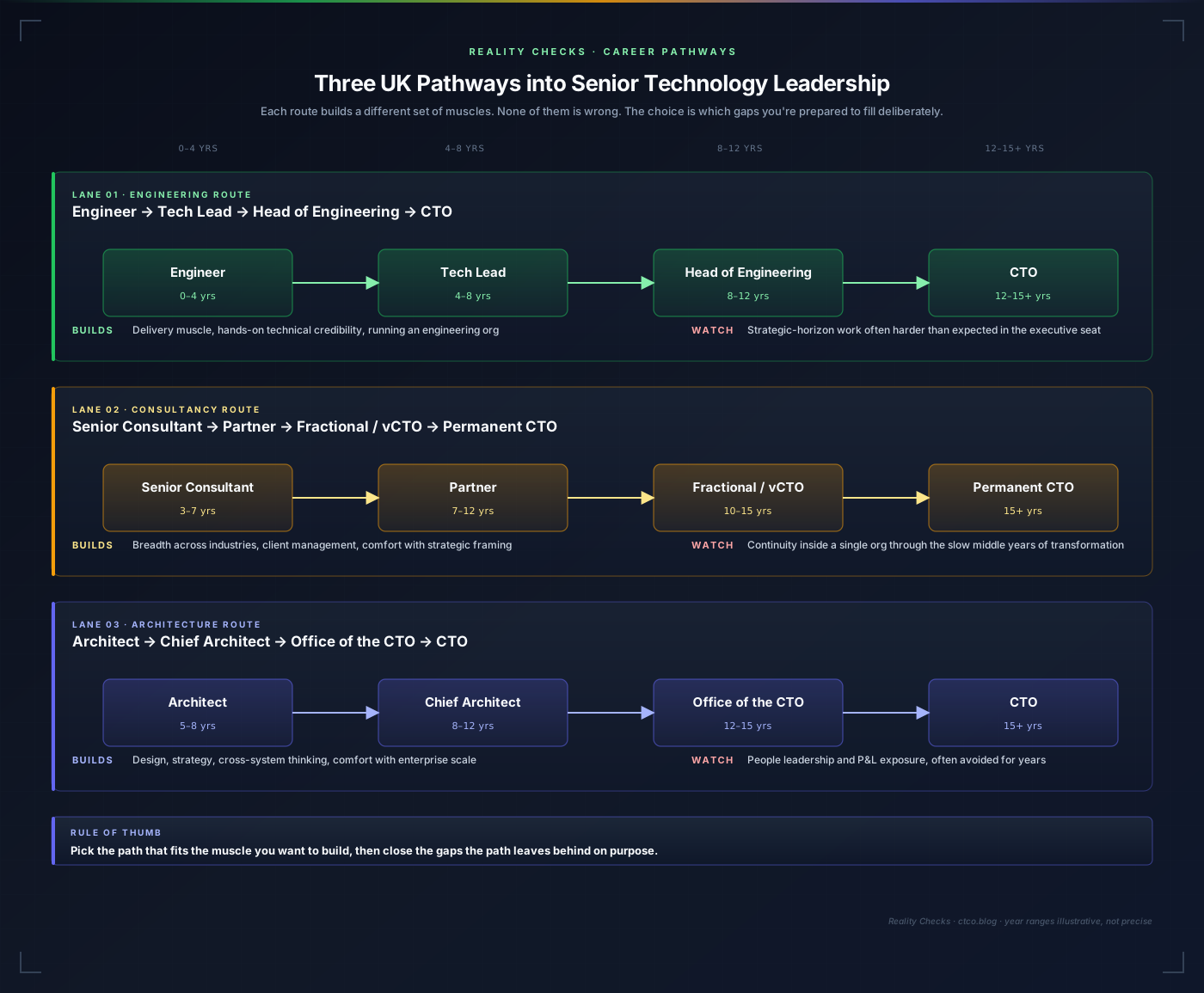
The first is engineer to tech lead to Head of Engineering to CTO. This pathway builds the deepest operational and delivery muscle, the strongest hands-on technical credibility, and the most direct exposure to running an engineering org. It’s also the slowest to build, typically twelve to fifteen years end to end, and the people who walk it sometimes find the strategic horizon work harder than they expected when they finally reach the executive seat.
The second is consultancy senior to partner to fractional to permanent CTO. This route builds breadth across industries, strong client management, and a comfort with strategic framing that the engineering-first route often has to learn from scratch. The trade-off is continuity. Walking into a permanent CTO role from a portfolio career is a real shift, and the muscle that needs deliberate work is the one for staying with a single organisation through the slow middle years of a transformation.
The third is architect to Chief Architect to OCTO to CTO. This pathway is strong on design, strategy and cross-system thinking, and is increasingly common in UK enterprise. The gap to close deliberately is people leadership and P&L exposure, both of which architects can avoid for years before realising they need to be developed.
For people aiming at a fractional or vCTO seat rather than a permanent CTO chair, the relevant question is whether you actually want to run a small business, because that’s what fractional practice is. Most of the fractionals I’ve seen succeed treat their portfolio as a portfolio: they price deliberately, they say no often, and they have a clear answer to what kind of client they don’t take. The ones who struggle tend to be the ones who treated independence as a holiday from the job rather than a different job.
For Technology NED roles, the honest entry path is usually a permanent CTO or CIO seat first, followed by a deliberate move into board work. NED positions don’t typically come up for people without executive experience to draw on, and the boards who hire well are the ones who notice when a CV is short of operational scar tissue.
Picking the Title That Matches the Work
The market is doing something useful by splintering technical leadership into formats that match how organisations actually operate. Fractionals, OCTOs, Technology NEDs, vCTOs and the rest are real responses to real demand for senior judgement at variable cost and locus. None of them are second-class versions of being a CTO, and treating them as stepping stones rather than as proper roles in their own right is part of how the broader title gets devalued.
For organisations, the work is to scope the role honestly before you write the job description, then hire for the shape of the work rather than for a label that looks impressive on the org chart. For individuals, the work is the same in mirror image: pick the title that fits what you actually do, defend it in conversation, and let other people pick the one that fits theirs. The word stays useful when the people using it are careful with it.


